' cx='32' cy='32' r='32' /%3E%3Ctext x='50%25' y='55%25' dominant-baseline='middle' text-anchor='middle' fill='%23FFF' %3EAM%3C/text%3E%3C/svg%3E)

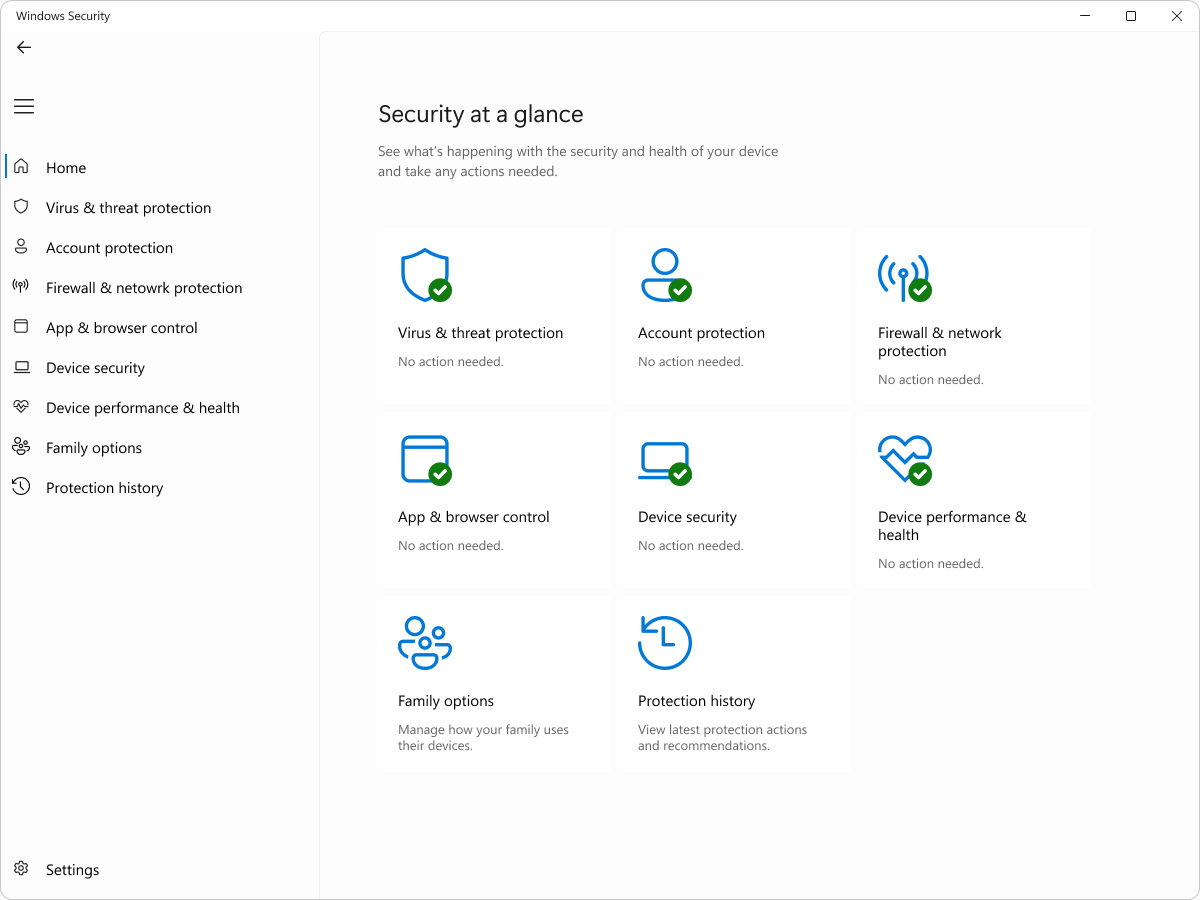
Open Start, type Windows Security, and check that its dashboard shows green check marks; green means the device is sufficiently protected, while yellow requires a recommended action and red requires immediate attention.^1^
Check your protection
- Open Windows Security
- Select Start, type Windows Security, and open it.
- Review every displayed protection area. Address any yellow or red indicators.
- Confirm antivirus protection
- Select Virus & threat protection.
- Under Current threats, check:
- Whether threats are currently detected.
- When the last scan ran.
- What action Windows took.
- Select Manage settings and confirm Real-time protection and Tamper Protection are on. Real-time protection scans files and programs as they are accessed; Tamper Protection prevents other applications from changing important Defender settings.^2^
- Update malware definitions
- Go to Virus & threat protection → Protection updates → Check for updates.
- This downloads the latest security intelligence used to recognize threats.^2^
- Run a scan
- Start with Quick scan.
- For a more thorough check, select Scan options → Full scan → Scan now. This checks every file and program and can take considerable time.
- If you have a specific reason to suspect an infection, save your work and choose Microsoft Defender Antivirus (offline scan). The computer restarts and scans before normal Windows starts, making persistent malware harder to hide.^2^
- Review previous detections
- Open Windows Security → Protection history.
- Check for quarantined or removed malware, potentially unwanted applications, disabled security services, and unresolved actions.^1^
- Also inspect Allowed threats under Virus & threat protection. If something was allowed accidentally, select it and choose Don’t allow.^2^
- Check the other security layers
- Firewall & network protection: verify the firewall is enabled for the active network.
- App & browser control: review Microsoft Defender SmartScreen protection.
- Device security: review available features such as Secure Boot, TPM, and core isolation.^1^
Keep the computer protected
- Install Windows updates and restart when requested.
- Do not ignore SmartScreen warnings for unknown applications or downloads.
- Avoid unexpected email attachments and suspicious links.
- Keep User Account Control enabled.
- Do not run multiple real-time antivirus products simultaneously, because doing so can cause instability or reduced performance.^3^
If the PC runs Windows 10, support ended on October 14, 2025. It no longer receives free security fixes, so moving to Windows 11 on supported hardware is important for continuing protection.^4^
No status screen can guarantee that a computer has no malware, but green indicators, current security intelligence, an enabled firewall and real-time protection, a clean full scan, and no unresolved items in Protection History provide the practical checks available in Windows.
References
' cx='32' cy='32' r='32' /%3E%3Ctext x='50%25' y='55%25' dominant-baseline='middle' text-anchor='middle' fill='%23FFF' %3EMP%3C/text%3E%3C/svg%3E)
 , search for it in the Start menu.